January Reflections
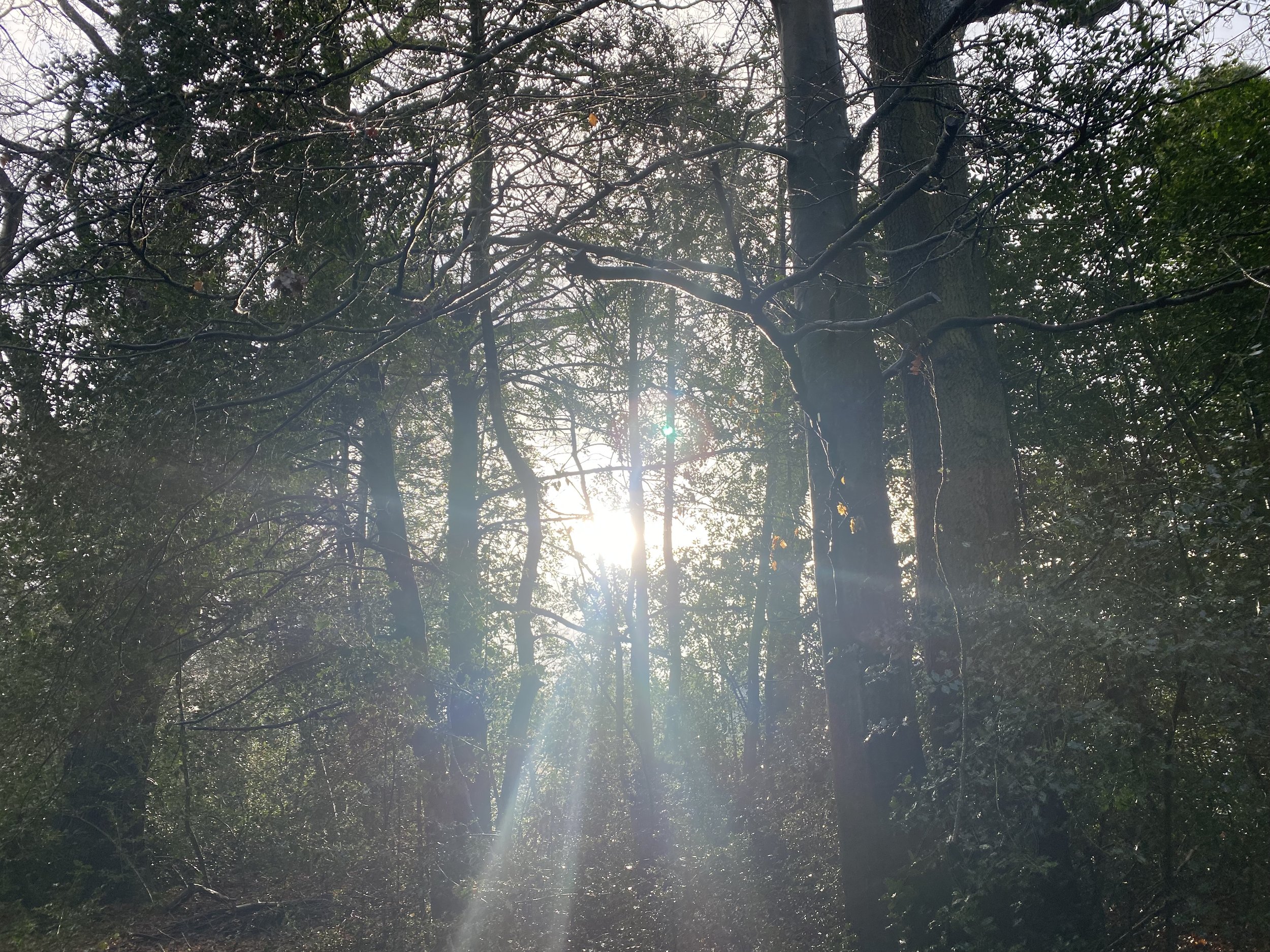
Trees with the sun shining through
When I first thought about putting pen to paper I had imagined writing about the winter. How whilst we celebrate new year from the point of view of the Gregorian calendar, we are still deep in winter and all that winter requires. Slowness, going inward, tending to our grief, preserving energy for the summer and resting. Winter is a deep time. It always surprises me when I hear another say they hate winter, and yet I used to feel this way. Not any longer, I have grown to love winter and all its ways. I think it’s easy to hate winter in a culture that reveres ascension, the light, happiness - because winter asks something different. Winter is deep. Winter doesn’t shy away from the grief we hold in our hearts, it says welcome, welcome - and we resist, not knowing how to be this way. It’s confusing, as if everything we’ve ever been told, winter resists - and may be, in this way, winter is the most magical of all seasons, could it be?
These were the words that I was going to write, probably a little longer, with a little more poetic soul - I always hope to bring this essence. Then January met us abruptly, intensely. We’ve been met by devastation, chaos, death. Not new, we’ve been in this place for years now (for decades and generations), but a quickening further into The Long Dark.
I listened to another’s holy rage the other day as they expressed the need for action, as they said enough with the grief and the vigils. But just as a love for winter can feel radical so can grief. Our grief is sacred, our grief is needed, along with many other elements, ways and actions. Grief can look like sadness but I believe our holy outrage* is a potent element to our grief. I wonder if we can even come to our holy outrage without a sense of grief. When one is numb, so is the other.
I often think about someone who is feeling deeply who is met with - do you need help or have you seen a therapist, or should you see GP. I wonder if we’ve lost a deep sense of what it is to be impacted by the world, even if it’s our own world. To feel it all and for that to be allowed, more than that, for that to be welcomed in.
In the Smell of Rain on Dust Martín Prechtel tells the story of Big Nettles, Big Nettles has lost his brother and he is walking through the village wailing, sobbing, screaming. The village look on. Then there’s a moment where they join him, where they too shed tears and come to their grief. No-one is saying you need to see a psychologist - they understand that this way of grief. They understand that to love is to grieve, that this is the way of grief in its enormity and that it is something that is collective - the whole village is grieving.
We’ve become numb to the ways of winter and to the ways of grief. Do you remember walking past a homeless person and barely noticing them? I do. (I’m glad that this is no longer for me, I walk past and feel grief in my heart, often I don’t walk past I say hello, or smile, or offer something.). This is how desensitised we can become to humanity. We aren’t able to let the sadness penetrate, to score our hearts.
The intensity of what is happening in our world is deepening, I feel it in every cell of my body. The other day I heard my voice within ask “why are you so on edge?” - a beautiful enquiry when not coming from a place of judgement (and there was a little judgement). And I took a moment and responded “of course you are, you’re feeling all that’s happening in the world.” I often say that our big, beautiful feelings are the most appropriate response. We’ve lost sight of what is the most appropriate response. When someone we love dies it would be so strange if we were OK. When we’re looking on at a world that is burning, it would be so strange if we were OK.
Depending on your proximity to all that’s happening you may very well feel OK, let’s not judge that either. Everything can co-exist, everything intertwined. For me I can feel my central nervous system relentlessly buzzing underneath it all, the smallest of things that escalate this edginess within me - and yes, of course. I’m choosing to lean into all that’s happening in the world. I feel blessed that I’m in community with people across the world, people who are in closer proximity to the death and destruction that is happening. I hold this for them, for us, for us all.
So yes we are beginning a new year, but not really, and the times we’re living in are deepening, are becoming more devastating. It can be hard to know how to respond, what to do. I say respond with your grief, with your holy outrage, with your heart. I say we are better together than we are alone - we cannot do this alone. Every action, every act of love, matters. When you reach out to someone less resourced that you, when you hold a space for others to grieve, when you have conversations with your fellow humans about what this means, how your work matters and what to do, when you read a book that challenges the systems we live in, when you write a poem, when go out in nature and realise that you want to do more to support our beloved mother earth, when you talk to your children about care and why you’re buying a second hand book, rather than a new one, when you love so deeply that you grieve - this all creates movement, this all matters.
And I don’t know. I honestly don’t know. I hold what’s in my heart, I lean in, I listen to the whispers of the earth, to what soul calls me towards. I sit with others in the questioning of it all. And I trust that this will be the medicine, the medicine that’s needed not for me, not even for my family, but for us all, and for our beloved earth. It matters.
*with love to Holly Truhlar for introducing me to this sense of holy outrage